

Last Updated: September 4, 2023 by Flora Gibbins
Did you know that Betta fish can recognize their owners and even learn tricks, much like dogs? Incredible, isn’t it? I was taken aback when I discovered this little fact. Their ability to engage with their surroundings goes far beyond what we typically associate with fish.
Out of all the Bettas, there’s a specific species that stands out from the rest: the stunning, charismatic Blue Betta fish or Betta smaragdina. This one’s an entirely different species from the Japanese Fighting Fish Betta splendens.
[FREE DOWNLOAD]: How To Avoid The Top 5 Mistakes New Betta Owners Make
It’s all that Betta intelligence wrapped in a vibrant, iridescent blue body that glimmers under the water — almost like a living gemstone navigating through the underwaters. It’s a sight to behold and one that often has me entranced in front of my aquarium, observing their mesmerizing dances through the water.
If you’re thinking of welcoming a Blue Betta into your home or are just as fascinated by them as I am, you’re in the right place. As a passionate Betta fish keeper myself, I’m here to share everything I’ve learned about these aquatic wonders. From key facts to their care, behavior, and even tips for choosing your very own Blue Betta fish, we’re about to delve deep into the world of these enchanting creatures.
Contents
Blue Betta Facts and Overview
- Common names: Blue Betta, Emerald Betta fish
- Scientific name: Betta smaragdina
- Adult size: 2 to 2.5 inches.
- Lifespan: 3 to 5 years
- Colors: Blue and green hues, with males exhibiting more intense coloration
- Origin: Thailand and Cambodia
- Minimum tank size: 5 gallons for a single Blue Betta
- Diet: Omnivore
- Water temp: Between 76-82°F (24-28°C)
Origin and Distribution
The first time I learned about the origin of the Blue Betta fish species, B. smaragdina, it immediately took me on an imaginary journey to the verdant landscapes of Southeast Asia. These charming aquatic companions hail from the shallow waters of Thailand and Cambodia, making them true children of the tropics.
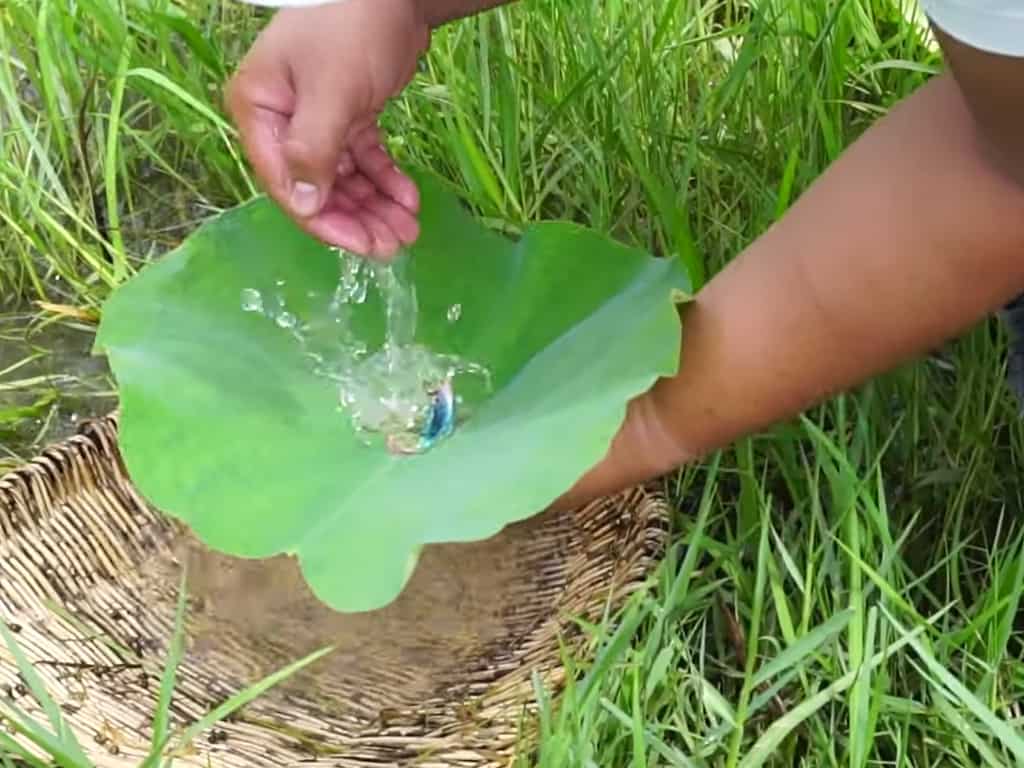
In their natural habitats, you’ll find them in various water bodies ranging from slow-moving streams to rice paddies, and even in swamps. Their homelands are adorned with lush vegetation, a characteristic that reflects their preference for plant-heavy environments in aquariums. I recall one particular vacation to Thailand where I had the opportunity to observe these captivating creatures in their natural surroundings. The sight was truly a memorable one and provided me with insights that I couldn’t have gained from reading alone.
Over the years, the Blue Betta has made a journey from these humble freshwater habitats to homes and hearts worldwide. Their stunning coloration, coupled with their manageable size and care requirements, have made them a favorite in the aquarium hobby. The shift from being purely wild species to becoming domesticated aquarium pets has led to the creation of various strains, each with unique coloration and patterns.
Despite their wide distribution in the aquarium trade, it’s essential to remember that wild populations of B. smaragdina may be under pressure due to habitat loss and pollution. As keepers of these enchanting fish, we carry a responsibility to ensure our pets are sourced ethically and sustainably. I can’t stress enough how crucial it is to make informed and responsible choices when bringing home these little pieces of the tropics.
Appearance
Now, let’s delve into one of the most mesmerizing aspects of Blue Betta fish, their appearance. You know, when I first set my eyes on a Blue Betta, it was like looking at an underwater rainbow – the play of colors was truly breathtaking.
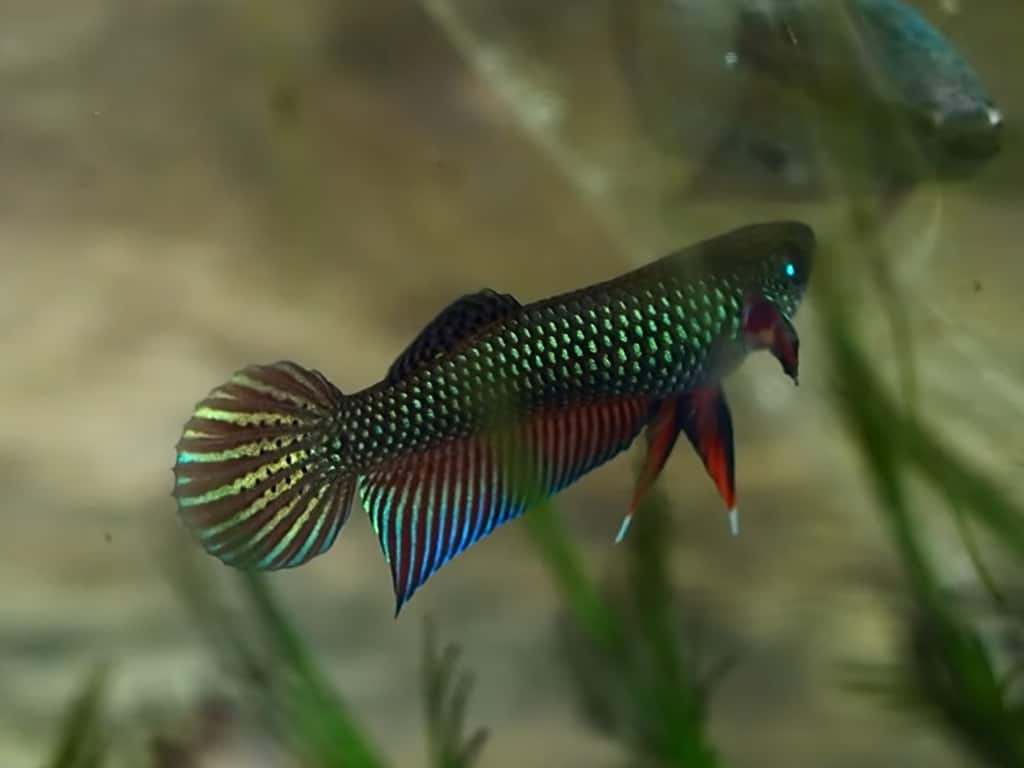
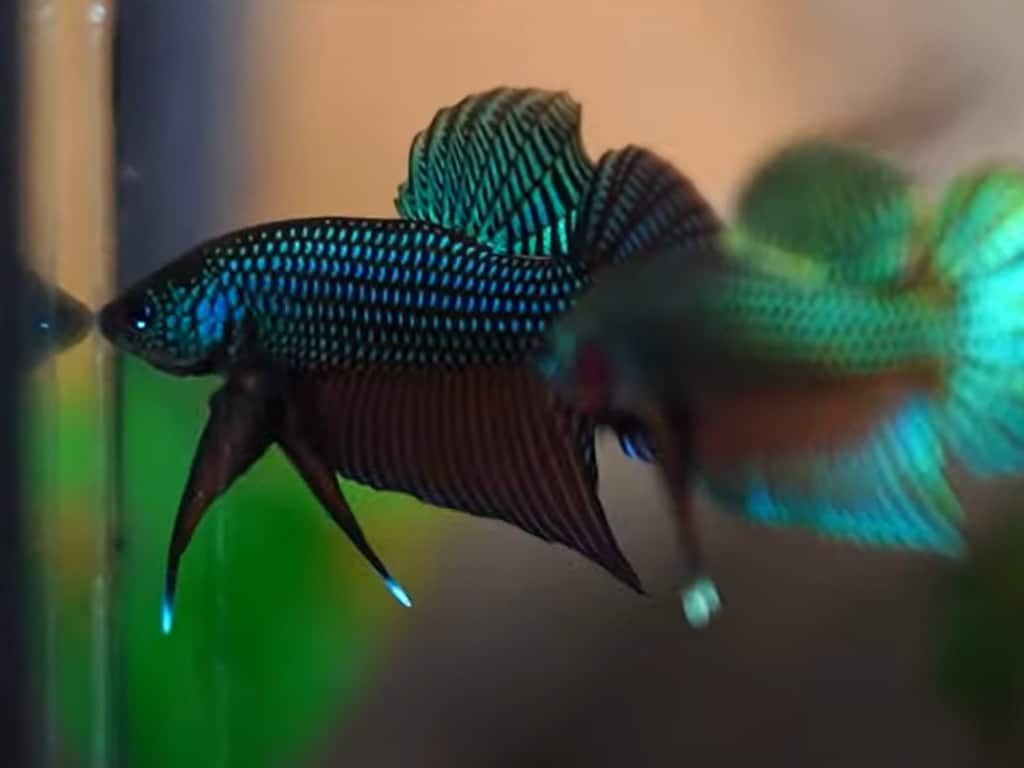
Blue Betta fish, as their name suggests, predominantly display an array of blue shades, but what makes them really stand out is the spectacular iridescence they possess. Depending on how the light hits them, you’ll see a shimmering display of blue and green tones, much like the precious gem they’re named after, the emerald. The males, in particular, showcase a more vibrant color palette and tend to exhibit greater iridescence than their female counterparts.
They possess a streamlined body typical to many Betta fish species, and while they don’t boast the dramatically flowing fins of the Betta splendens or Siamese Fighting Fish, their fins are still quite graceful. The dorsal and anal fins are more rounded, while the caudal, or tail fin, is broader and fan-shaped. When displaying or agitated, they’ll flare these fins impressively.
Their eyes, often overlooked, are a significant part of their appearance. Most Blue Bettas have eyes that contrast sharply with their body color, providing an enchanting focal point.
One feature that always intrigues me is their labyrinth organ. Although not visible, it is a unique adaptation that allows Blue Bettas to breathe air from the surface, a characteristic found in all Betta species.
So, in terms of appearance, the Blue Betta species is undeniably one of the most enchanting freshwater fish you’ll come across. Every time I catch a glimpse of mine shimmering under the aquarium light, I’m reminded of why I fell in love with these aquatic jewels in the first place.
Behavior and Temperament
If you’re picturing the typical Betta aggression that’s often associated with Siamese Fighting Fish, you’re in for a pleasant surprise. Blue Betta fish exhibit a noticeably milder temperament.
These fish are generally peaceful, making them a popular choice among aquarists. Yet, they retain some of the classic Betta fish spunk that we’ve all come to know and love. I remember watching my first Blue Betta, Pearl, gliding calmly through the aquarium one moment and zipping around with playful energy the next.
Male B. smaragdina can display territorial tendencies, especially around breeding times, but it’s not as intense as you would see in a B. splendens. I once had two males in a large, well-planted aquarium, and while there were occasional flaring displays and chasing, outright fights were rare.
That being said, each fish is an individual, and you may come across Blue Bettas that are more or less aggressive than average. I had a female once, Emerald, who ruled her tank with an iron fin, keeping everyone else in check.
[FREE DOWNLOAD]: How To Avoid The Top 5 Mistakes New Betta Owners Make
In terms of activity level, Blue Betta fish are moderately active. They often spend their time patrolling their territories or investigating their environment. It’s truly entertaining to watch. My Blue Betta, Sapphire, loves to weave in and out of the plants and decorations, pausing every so often to flare at his reflection.
However, despite their general peaceful nature and moderate activity, it’s crucial to monitor your Betta’s behavior, especially when introducing new tank mates. Keeping a harmonious tank environment contributes significantly to your Betta’s wellbeing, and the key is in understanding and respecting their individual behaviors and temperaments.
Blue Betta Tank Mates
One of the most common questions I hear from fellow aquarists is: “What can I keep with my Blue Betta?” And the answer, interestingly, can be a rather long list. Remember, Blue Bettas are more peaceful than their Siamese Fighting Fish relatives, but careful selection of tank mates for this Betta fish is still crucial. Here’s my take based on personal experiences:
Compatible Fish Species
- Small Tetras: Neon Tetras, Cardinal Tetras, and Ember Tetras make excellent companions. They are peaceful, active, and add a splash of color. Just make sure to keep them in schools as they are a schooling fish.
- Harlequin Rasboras: Their peaceful nature and distinct color make them a great addition. They are schooling fish as well, so keep a group.
- Corydoras Catfish: Their peaceful demeanor and bottom-dwelling habits make them a good choice. Plus, watching them sift through the substrate is fascinating!
- Ghost Shrimp and Cherry Shrimp: They add diversity to your aquarium and also help to keep it clean.
- Snails: Invertebrates such as mystery snails, Nerite snails, or Malaysian Trumpet snails are all excellent choices and add another level of interest to your tank.
Aquatic plants, in my opinion, are the best non-fish tank mates. Plants provide cover, reduce stress, and enhance water quality. Java fern, Anubias, and Amazon swords are some of my personal favorites.
Tank Mates to Avoid
Avoid fish that are fin-nippers or overly aggressive species. Also, avoid fish that have a similar appearance to Betta fish, such as Gouramis, as Bettas may see them as rivals. Large or very active fish can also stress Bettas. I once had a group of Zebra Danios in an aquarium with a Betta, and the poor guy was so stressed by their constant darting around that I had to move him to a separate tank.
While this guide provides a general rule of thumb, keep in mind that each Betta’s temperament can vary. Always monitor your tank closely when introducing new tank mates, and have a backup plan ready in case things don’t work out. You’d be surprised at the interesting dynamics that can unfold in your little underwater world!
Tips for Choosing Your Blue Betta Fish
So, you’ve decided to welcome a Blue Betta into your aquatic family? That’s excellent news! Choosing the right Betta can be a fun, albeit sometimes daunting, task. Here are some tips I’ve gathered from my own experiences:
What to Look For in a Healthy Blue Betta Fish
- Bright, Clear Colors: Healthy Bettas have vibrant colors. A dull or fading color could indicate stress or illness. I still remember when I picked out Sapphire, my first Blue Betta fish — his deep blue hue was simply mesmerizing!
- Active Behavior: A healthy Betta should be alert and curious, moving around in its tank. Beware of lethargic Bettas or those that don’t react to your presence.
- Good Appetite: A Betta fish with a healthy appetite is a good sign. If possible, ask to see the Betta being fed before you buy.
- Clear Eyes and Fins: The eyes should be clear, not cloudy or swollen. The fins should be intact without tears or discoloration. A damaged fin isn’t necessarily a deal-breaker (it can heal), but it might indicate poor care.
- Smooth Scales: The scales should be smooth and lie flat against the body. Raised scales can be a sign of disease.
Ethical Considerations When Buying a Betta Fish
It’s important to remember that choosing to buy a Betta fish is a vote towards the kind of industry we want. As Betta enthusiasts, we should strive for a market that treats these beautiful creatures with respect and care. Here are a few tips:
- Avoid Cups: Many stores keep Betta fish in small cups. While convenient for display, this is far from their ideal living condition. I always opt for stores that keep Bettas in proper aquariums.
- Buy From Reputable Breeders or Stores: Make sure the fish are well-cared for and the staff is knowledgeable. This not only ensures healthier fish but also supports good business practices.
- Don’t Support Dyed or Tattooed Bettas: Sadly, some places alter Bettas’ appearances to make them more “appealing”. This is incredibly harmful and stressful for the fish.
Choosing your Blue Betta fish is just the start of an exciting journey. Remember, a happy and healthy Betta starts with a conscientious decision made at purchase.
Blue Betta Care
Being an aquarist is much more than having a dynamic piece of living art in your home; it’s about creating and maintaining a suitable environment for your aquatic pals. Proper care for your Blue Betta fish is essential for their well-being and longevity. From feeding to handling common diseases, let’s delve into the world of Blue Betta care and discover how we can make our underwater friends thrive!
Tank Setup
Setting up your Blue Betta’s tank is like preparing a new home for a beloved family member. Here are some key points to consider:
Tank Size
While many people may think a small bowl is enough space, but I always recommend a minimum of a 5-gallon tank size for a Betta fish. A larger environment provides more space for swimming, exploration, and reduces stress. My Betta, Sapphire, thrives in his 10-gallon home!
What to Put in the Tank
- Substrate: Sand or fine gravel works well for Bettas. Avoid sharp substrates that can tear their delicate fins.
- Plants: Plants not only enhance your tank’s aesthetic but also provide hiding spots and improve water quality. Go for silk plants or live ones like Java Fern, Anubias, and Cryptocoryne.
- Decorations: Add caves or Betta hammocks for extra hiding and resting spots. Make sure they’re free of sharp edges.
Equipment and Accessories
- Filter: A filter with adjustable flow is necessary as strong currents can stress your Betta fish. My go-to is a sponge filter, which provides both biological and mechanical filtration without creating strong water flow.
- Lighting: A good light will illuminate your Blue Betta’s beautiful colors and help live plants grow. Just make sure there are also periods of darkness to mimic a natural day-night cycle.
- Thermometer: This tool is crucial to keep a check on water temperature.
- Heater: Blue Betta fish need warm water (around 76-80 degrees Fahrenheit). A reliable heater is essential, especially if you live in a cooler region.
Water Parameters
Water parameters play a crucial role in the health and well-being of your Blue Betta. Here are some guidelines for creating an optimal aquatic environment:
- Temperature: Blue Bettas are tropical fish and thrive in warm water. The ideal temperature range is between 76-80 degrees Fahrenheit. I’ve found my Blue Betta to be most active around 78 degrees.
- pH Level: Betta fish prefer slightly acidic to neutral water. A pH range of 6.5 to 7.5 is typically considered ideal. However, they can adapt to slightly different pH levels, provided the change is gradual.
- Ammonia, Nitrite, and Nitrate: Ammonia and nitrites should always be 0 ppm (parts per million), as they’re extremely toxic to fish. Nitrates should be kept low (preferably below 20 ppm), which is usually managed with regular water changes and a good filtration system.
- Hardness: Blue Betta fish can tolerate a moderate range of water hardness, but generally, soft to slightly hard water is best. The general hardness (GH) should be between 3-10 degrees, and the carbonate hardness (KH) should be between 2-8 degrees.
- Cleanliness: Regular partial water changes (I typically do 25% once a week) help maintain good water quality and prevent the build-up of harmful substances. I remember once neglecting water changes for a couple of weeks, and I could see a noticeable difference in Sapphire’s energy levels. Never again!
Read more about ideal water parameters for Betta fish here.
Diet and Feeding
One of the best ways to ensure the health and vitality of your Blue Betta is to offer a varied and nutritionally balanced diet. Watching Sapphire’s enthusiastic feeding displays is one of my daily highlights. Here’s what I’ve learned about feeding Blue Betta:
- Diet: Blue Bettas are omnivorous, meaning they eat both plants and animals. A high-quality Betta fish pellet should form the staple of their diet, but it’s essential to supplement this with other foods. Frozen or live foods like daphnia, bloodworms, and brine shrimp are excellent choices. Vegetables such as peas (make sure to remove the skin) can also be given occasionally.
- Feeding Schedule: I generally feed Sapphire twice a day, morning and evening. Each feeding should only be a small amount that can be eaten within a few minutes. Overfeeding can lead to obesity and water contamination, so I’m always careful not to give in to those begging eyes!
- Fasting: A once-a-week fasting day is recommended for Blue Betta fish. This break gives their digestive system a chance to rest and can prevent issues like constipation.
Common Health Issues and Diseases
Even with top-notch care, your Blue Betta fish may face health issues at some point. Here are common health problems you might encounter and tips to handle them:
- Fin Rot: This is a bacterial infection that causes the fins to fray and lose color. Good water quality is the best prevention. If your Betta fish contracts fin rot, water changes and antibacterial treatments are usually effective. I dealt with this once with Sapphire, and improving the water quality made all the difference!
- Ich: Also known as ‘white spot disease’, Ich presents as tiny white dots on the fish’s body. It’s caused by a parasite and can be treated with over-the-counter medications.
- Bloating and Constipation: Overfeeding can cause these issues. If your Betta is bloated or not passing waste, try fasting them for a day or feeding them a peeled, cooked pea, which acts as a natural laxative.
- Velvet: This is a parasitic infection that looks like a gold or rust-colored dust on the fish’s body. If your Betta has Velvet, you’ll need to use an over-the-counter medication for treatment.
- Swim Bladder Disease: This causes balance issues, and your Betta might swim sideways or even upside down. It’s usually due to overfeeding or eating too quickly. Fasting and feeding high-fiber food can often resolve the issue.
One of the unique aspects of keeping Betta fish is understanding their complex social behaviors. Let’s dive into what you should expect in terms of your Blue Betta’s social needs:
- Bettas and Solitude: It’s important to remember that Bettas are territorial and often prefer to live alone. In their natural habitat, Blue Betta fish have large territories they guard fiercely. The males, in particular, are solitary and can become aggressive towards others in their space. Sapphire, for instance, seems to thrive in his own exclusive territory.
- Companionship: While Betta fish often do well in solitude, it doesn’t mean they can’t have tank mates. The key is choosing compatible species that won’t trigger your Blue Betta’s aggressive instincts. Good choices often include peaceful and fast-moving fish that aren’t likely to nip at the Blue Betta’s fins.
- Observing Interactions: It’s important to monitor interactions in a community aquarium closely. Bettas are known for their displays of dominance, such as flaring their gills. If you notice signs of stress or aggression, it may be necessary to separate the Betta.
- Enrichment: Even when kept alone, Blue Betta fish need mental stimulation. This can come from exploring their environment, interacting with toys (like Betta leaf hammocks and floating logs), or simply having a moment of excitement at feeding time.
While every fish is unique and their tolerance levels may vary, understanding their basic social behaviors is key to their well-being. Whether your Blue Betta lives in solitude or has a few carefully chosen tank mates, ensuring a peaceful environment is crucial to their happiness.
[FREE DOWNLOAD]: How To Avoid The Top 5 Mistakes New Betta Owners Make
Breeding Blue Bettas
Breeding Bettas can be a rewarding, albeit challenging, experience. If you’ve decided to embark on this journey, here’s what you need to know:
Gender Differences
Understanding the differences between male and female Blue Betta fish is vital. Males are generally larger, have longer fins, and more vibrantly blue and green. Females are smaller with shorter fins, and they also have a small white “egg spot” on their underside.
Steps in the Breeding Process
- Conditioning: Start by conditioning the male and female Bettas with a diet rich in live or frozen foods for about two weeks.
- Introductions: Introduce the female to the male’s tank but keep them separated, either with a clear divider or placing the female in a clear container inside the tank. This gives them time to get used to each other.
- Bubble Nest: If the male is interested, he will start building a bubble nest at the surface of the water. This is where he’ll keep the fertilized eggs.
- Breeding: Once the nest is ready, you can release the female. If all goes well, the male will wrap around the female in a “nuptial embrace”, and the female will spawn and release eggs, which the male will fertilize.
- Post-Breeding: After spawning, the male will take the eggs into his mouth and spit them into the bubble nest. At this point, it’s advisable to remove the female, as the male may become aggressive protecting the nest.
Breeding Tips
- Prepare a Separate Tank: A 10-gallon tank with a heater and sponge filter is usually sufficient for breeding.
- Use Live Plants: They provide hiding spots for the female and places for the male to build his bubble nest.
- Provide High-Quality Food: Feed the parent fish and the fry (once hatched) high-quality, protein-rich food for best results.
- Be Patient and Observant: Breeding Bettas require time, patience, and a keen eye for observing their behavior.
Bear in mind that breeding fish should be undertaken responsibly, with a plan for how to care for and house the resulting fry. Helping Blue Betta fish reproduce is indeed an adventure and witnessing the circle of life can be incredibly gratifying!
FAQs on Blue Betta Fish
How long do Blue Bettas live?
They typically live for 3-5 years in captivity, although some can live up to 7 years with exceptional care.
Why is my Blue Betta losing its color?
Color loss can be due to stress, poor diet, aging, or illness. Ensure your Betta’s environment is clean, the diet is balanced, and if the problem persists, it might be best to consult a vet.
Can I keep two male Blue Bettas together?
Generally, it’s not advisable to keep two male Bettas together, as they are very territorial and will likely fight, causing stress and potential harm.
Do Blue Betta fish sleep?
Yes, Bettas do sleep, usually at night. They often rest at the bottom of the tank or on leaves near the surface.
How often should I clean my Betta’s tank?
The frequency depends on the tank size and whether it’s filtered. Generally, for a filtered 5-gallon aquarium, a 25% water change weekly is recommended.
Why is my Blue Betta making bubbles? .
Male Bettas create bubble nests at the surface as a mating behavior, it’s a sign they are ready to breed.
Are Blue Bettas Right for You?
In conclusion, keeping a Blue Betta is a rewarding and engaging hobby that involves a balance of care, observation, and learning. These fascinating fish, with their vibrant colors and unique personalities, have a way of captivating hearts, just like Sapphire captured mine.
Before bringing one into your life, consider if you’re ready for the responsibility. Do you have the time and resources to set up and maintain their aquatic home, keep their water clean, and feed them a varied diet? Are you willing to invest in learning about their needs and behaviors to provide them with the best life possible?
If your answer is a resounding “Yes,” then congratulations! You’re about to embark on a beautiful journey. The world of Blue Betta fish is filled with wonder and intrigue, and a Blue Betta can make a lively and fascinating addition to your home.
Remember, while there are general guidelines to Betta care, every fish is unique. You’ll likely learn something new about your Betta almost every day, and that’s part of the joy. As Sapphire flares his fins and dances around his tank at feeding time, I’m reminded of the joy these wonderful creatures bring into our lives. I can’t wait for you to experience this joy, too. Happy fish keeping!


